
A broken object can create a surprisingly large decision. Do we fix it, replace it, store it, or finally admit that it has become clutter?
Sometimes the object is inexpensive. Sometimes the repair costs more than a new version. But sometimes what we want to preserve is not only the object. It is the memory attached to it, the money already spent, or the satisfaction of keeping something useful in the world a little longer.
The University of Auckland hosted its first Repair Café in October 2025, bringing students, staff, and visitors together with volunteers who could diagnose and fix household items. About 50 people attended, and volunteers repaired roughly 80 percent of the items brought in, including a bicycle, electric scooter, guitar, and jewelry.
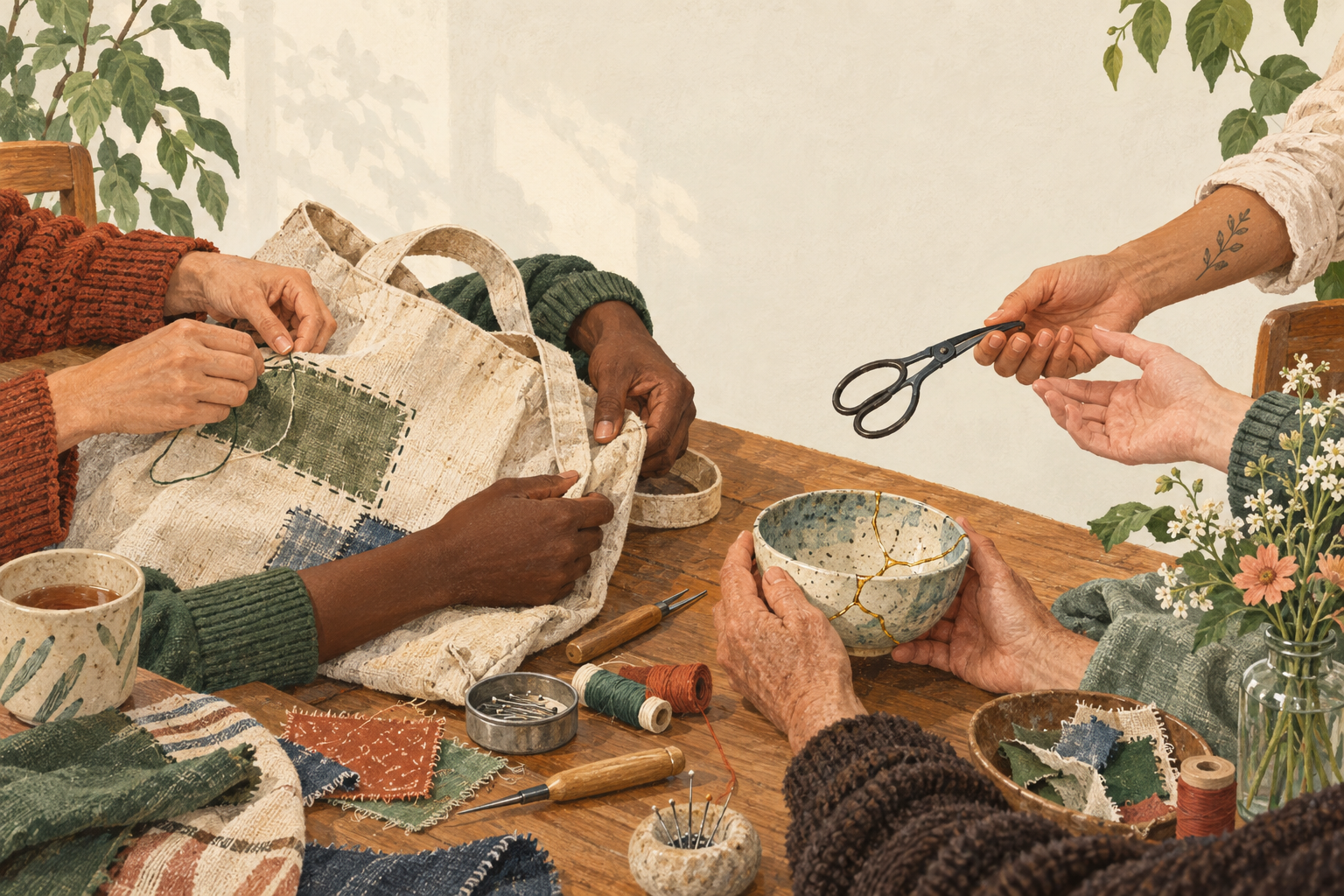
The university described the event as part of a wider repair-and-reuse movement. Its value was practical, but it was also social. People learned how to approach a broken thing instead of immediately giving up on it. They watched someone else’s hands. They asked questions. They left with an object that worked and, perhaps, a little more confidence about what they could do themselves.
A repair café does not solve the larger problems of disposable design or waste. It does offer a different habit of mind. Before throwing something away, we can ask whether it needs a new owner, a replacement part, a patient conversation, or simply someone willing to look closely.
That question applies to more than toasters and torn bags. Relationships, routines, and communities also need repair from time to time. The first step is often the same: stop treating damage as proof that the thing has no future.
Find one small repair this week. Mend a button. Tighten a loose handle. Call someone after a misunderstanding. Let care be practical.