

Humor is often treated as decoration, the pleasant extra that appears after the serious work is done. But the way we use it can shape the way we move through difficult days and stay connected to other people.
Researchers at UNSW Sydney studied humor styles and wellbeing in older adults. They found that affiliative humor, the kind that helps people laugh together, was associated with greater social contact. Self-enhancing humor, finding a little light without denying what is hard, was associated with better wellbeing through lower depression. Self-defeating humor, in which a person regularly makes themselves the target, was linked with poorer wellbeing.
Humor does not solve grief, illness, loneliness, or stress. It can include people or exclude them. It can soften a difficult moment, or hide pain that needs care. The kind that builds connection leaves room for everyone in the conversation, rather than making one person disappear so the room can laugh.
Share the story that still makes you laugh with someone who knows why it is funny. Look for the absurd detail in an ordinary day. Let humor make contact, rather than turning it into a performance.
The goal is not to become relentlessly cheerful. It is to remember that a laugh can be a form of companionship, especially when it leaves everyone in the conversation with a little more room to be human.
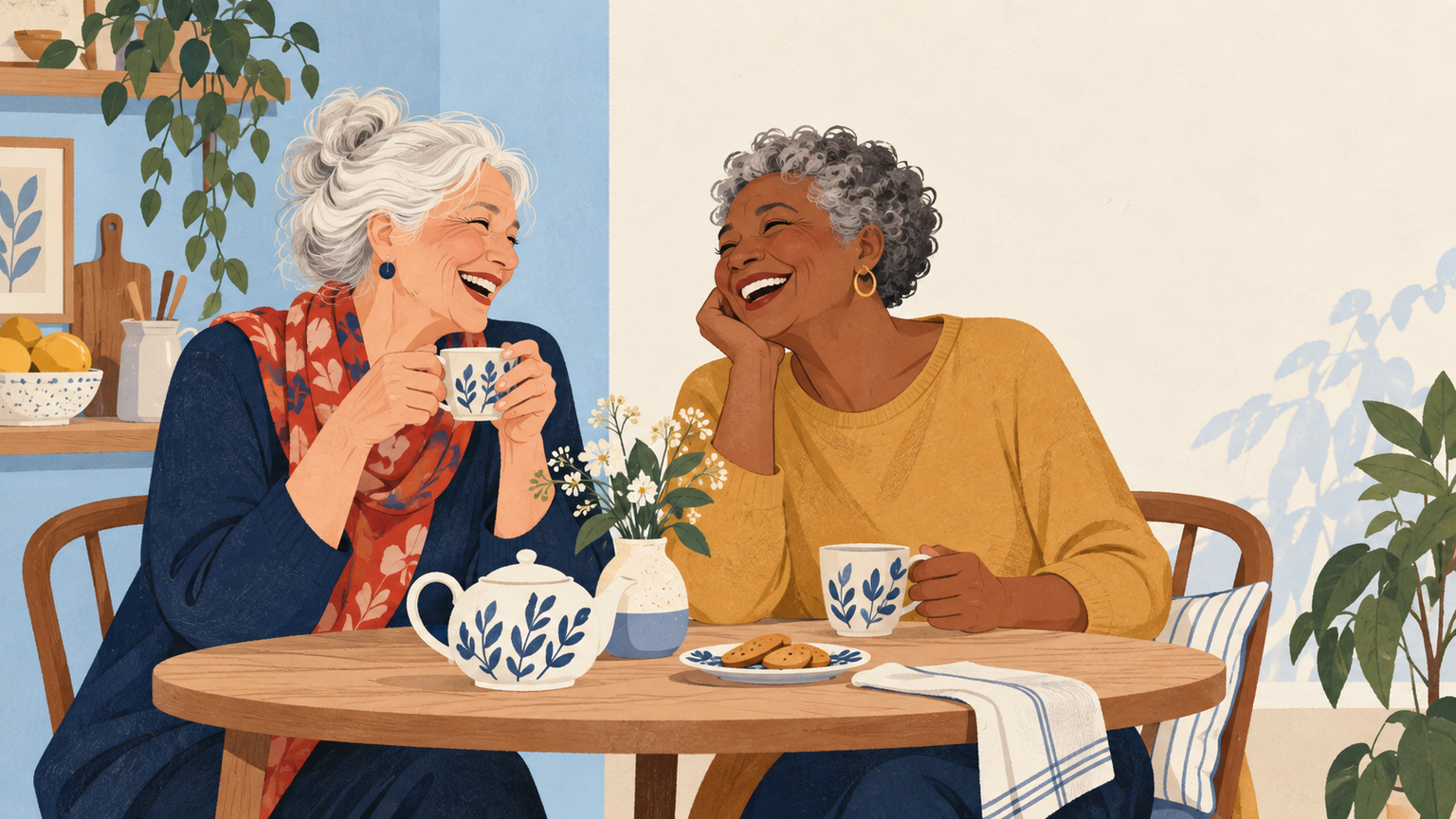
Image direction: Warm editorial scene of two older friends laughing together over tea, natural and unposed. Avoid exaggerated comedy or caricature.
Alt text: Two older friends sharing a genuine laugh over tea.