
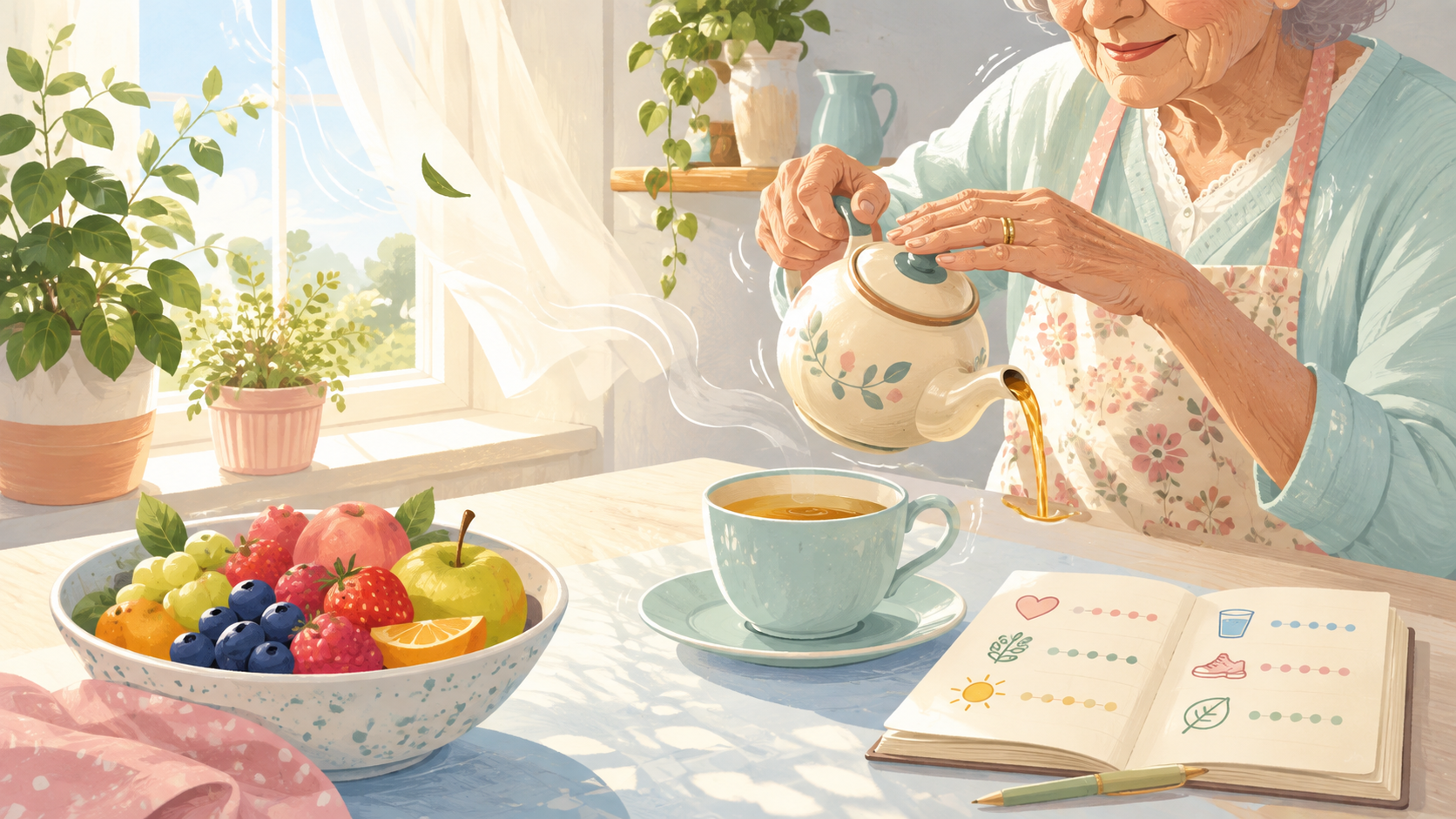
When my grandmother turned 99, I found myself looking at her life alongside the research on longevity. Her example made the science feel personal: a long life is built through ordinary days filled with movement, purpose, recovery, nourishment, belonging, and attention.
There is no single trick for reaching 99. What we can do is shape our environment and habits so the healthier choice becomes more natural. The Blue Zones work and research on cellular aging return to many of the same practices my grandmother lived.
Attention is your gift to give.
Andy Proctor, PhD
Move naturally
The longest-lived communities do not depend on punishing workouts. Walking, gardening, housework, stairs, and useful daily movement keep the body engaged. I want movement woven into my day, not reserved for the rare hour when everything else goes according to plan.
Know why you wake up
In Okinawa, the word ikigai names a reason to get up in the morning; in Costa Rica, plan de vida carries a similar idea. Purpose can be family, service, work, faith, or a contribution that matters. It does not need to impress anyone to give life direction.
Build a daily downshift
Chronic stress asks the body to stay on alert. A repeatable pause—prayer, meditation, a nap, a walk, or an unrushed meal—can mark a transition out of that state. The practice matters because it happens regularly, not because it is elaborate.
Stop before you are stuffed
The Okinawan reminder hara hachi bu means stopping around 80 percent full. I hear it as an invitation to slow down enough to notice satisfaction. A meal becomes easier to enjoy when I leave room to recognize that I have had enough.
Let plants carry more of the plate
Beans, lentils, greens, and other whole plant foods appear again and again in long-lived communities. The lesson is a direction rather than an absolute rule: build more meals around plants, fiber, color, and food close to its original form.
Create rituals of connection
My grandmother and I do not drink alcohol, so I do not treat wine as the lesson in longevity findings. The more durable insight is often the ritual around a table: familiar people, food, conversation, and time set aside to belong.
Belong to something bigger
Faith and community were woven through my grandmother’s life. Weekly worship and service gave her relationships, rhythm, and a place where she mattered. Whatever form it takes, belonging grows when people expect to see us and we show up for them too.
Put loved ones first
My grandmother opened her home, made breakfast, attended milestones, and stayed connected through decades of change. Close relationships are not decoration around a healthy life. They are one of its strongest foundations, built through repeated acts that may look small from the outside.
Choose the right tribe
Habits and emotions travel through relationships. The Okinawan moai—a committed circle of mutual support—offers a useful model. My grandmother had her own enduring group of friends. Friendship deserves intention: choose people who help good practices feel normal, then offer them the same support.
A practical next step
Choose one practice that feels generous rather than punishing. Take a walk, call someone older and ask what life has taught them, share a plant-centered meal, or make plans with your people. The goal is not merely more years, but more life in those years.