

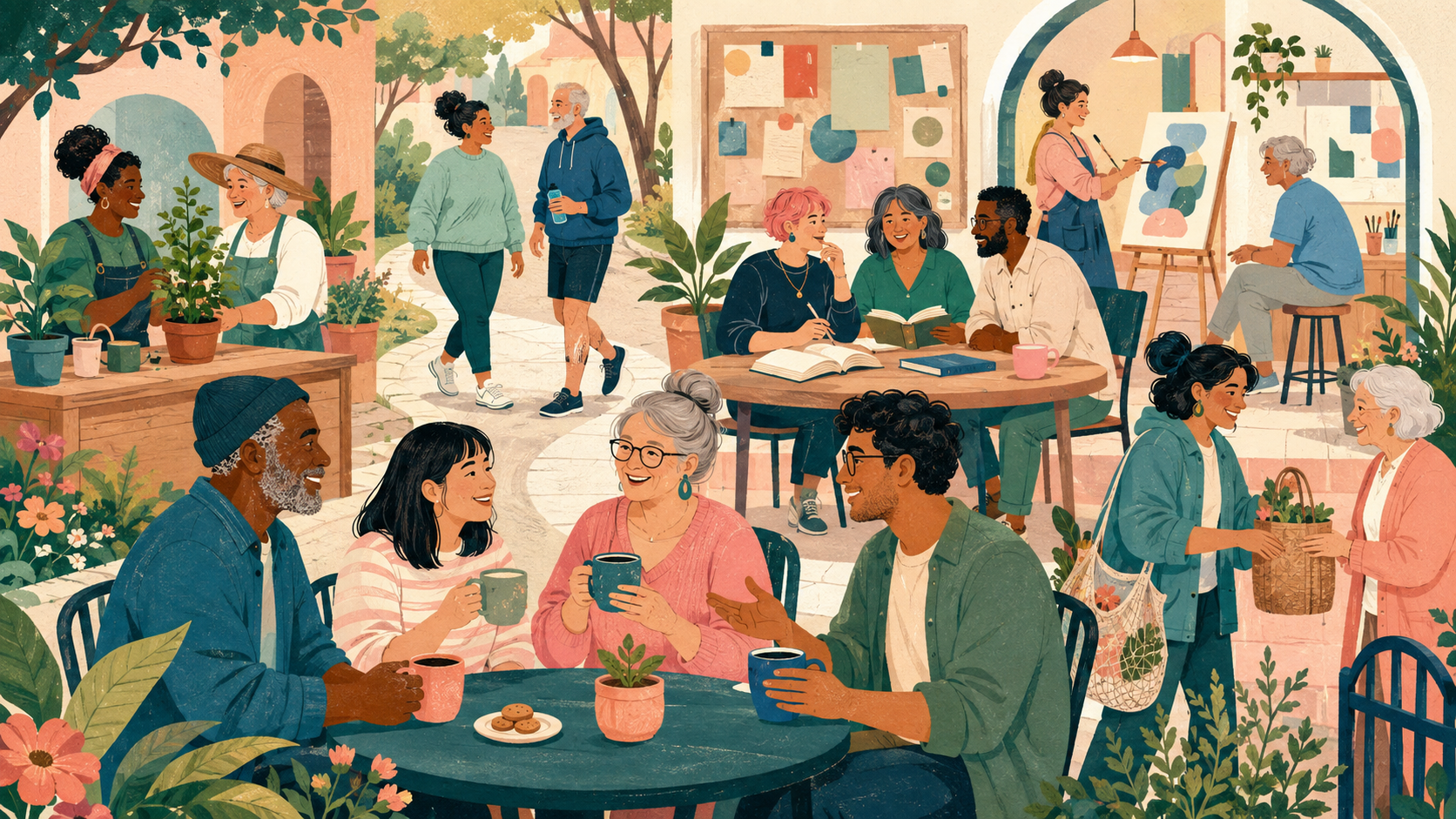
Making friends as an adult can feel much harder than it did when shared streets, schools, and schedules created connection for us. Friendship now asks for intention, vulnerability, repetition, and sometimes a willingness to begin again.
Digital connection is not always tangible connection. These six practices help move friendship into real conversations, shared places, and commitments that can survive changing stages of life.
The best thing is knowing there are people you still haven't met who will change your life forever.
Andy Proctor, PhD
1. Put down your phone and talk to people
A phone can protect me from awkwardness while also hiding the people nearby. Looking up, asking a simple question, and staying available for a few minutes creates opportunities that a feed cannot predict.
2. Practice nonsexual intimacy
Intimacy is the experience of being known and still loved. I can build it by sharing something honest, asking a real follow-up question, and listening without rushing to perform. Vulnerability can grow in small, reciprocal steps.
3. Create a commitment ritual
Friendships strengthen when we mark them as important. A recurring meal, annual outing, monthly call, or small tradition says that the relationship belongs on the calendar. The ritual provides repetition even when life becomes crowded.
4. Move closer when it makes sense
Distance shapes how often people see one another. Relocating for friendship is not possible or wise for everyone, but the principle scales down: choose a closer neighborhood, shared workspace, regular venue, or route that makes contact easier.
5. Reach across life stages
Marriage, children, work, retirement, illness, and other transitions can separate people whose schedules no longer match. Friendship can survive when I stay curious about a different stage instead of assuming we no longer have enough in common.
6. Make an old friend new again
Some former close friends have become memories through drift rather than conflict. Reaching out with warmth and without entitlement can reopen a door. We do not have to recreate the past; we can learn who each other has become.
A practical next step
Choose one person and make a specific invitation with an easy way to respond. Or return to the same community space often enough for familiarity to grow. Adult friendship is built through repeated beginnings.