
A neighborhood can be full of people and still feel like a place where nobody knows your name.
We pass the same faces at the mailbox, in the elevator, on the morning walk, or beside the grocery carts. We recognize jackets, dogs, cars, and routines. We know someone is there without quite knowing them.
Belonging often begins with a smaller gesture than friendship.
It begins with recognition.
Start with the repeated hello
Say hello to the person you see more than once.
The first greeting may feel formal. The second becomes familiar. Eventually, the hello carries a little history: the week it rained, the dog’s name, the new flower bed, the fact that one of you has been traveling.
Repetition turns strangers into known people.
You do not need to force a conversation. A greeting is already a small vote for the idea that a shared place can contain shared attention.
Ask a question that belongs to the place
“What grows well in this corner?”
“Have you lived here long?”
“Is there a good walking route nearby?”
“What is your favorite thing about this block?”
Place-based questions are gentle. They give people something real to answer and let you learn the neighborhood through someone else’s eyes.
A person may tell you about the old tree, the bakery that opens early, the bus stop that needs a bench, or the neighbor who brings soup when someone is sick.
A map becomes more human when it contains stories.
Offer one small usefulness
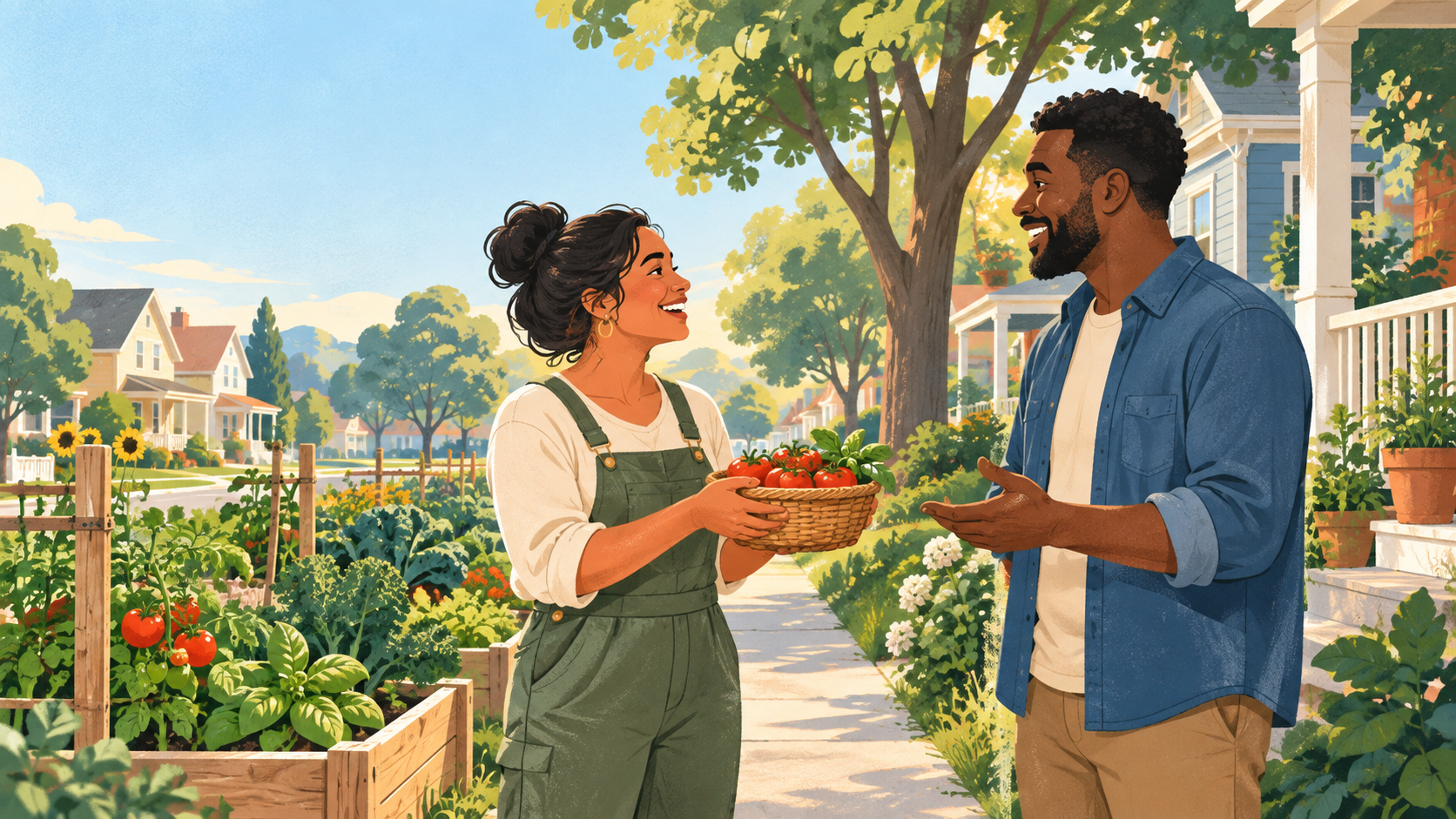
Bring in a package if you are already walking that way. Share extra tomatoes. Tell someone when the sidewalk is icy. Return the escaped ball. Write down the name of a repair person who did good work.
None of these acts requires a new community organization. They are the tiny infrastructure of trust.
People begin to feel safer in a place when they have evidence that others are paying attention.
Let the relationship remain light
Not every neighbor needs to become a close friend. There is value in a web of friendly recognition, too.
The woman who waves from the porch. The man who knows which trash day changed. The couple who saves a seat at the park concert. The teenager who carries an elderly neighbor’s groceries upstairs.
Community is not one grand feeling. It is a collection of ordinary moments in which people stop being invisible to one another.
This week, learn one name.
Use it the next time you meet.