
Some of the best news in the world is hard to photograph.
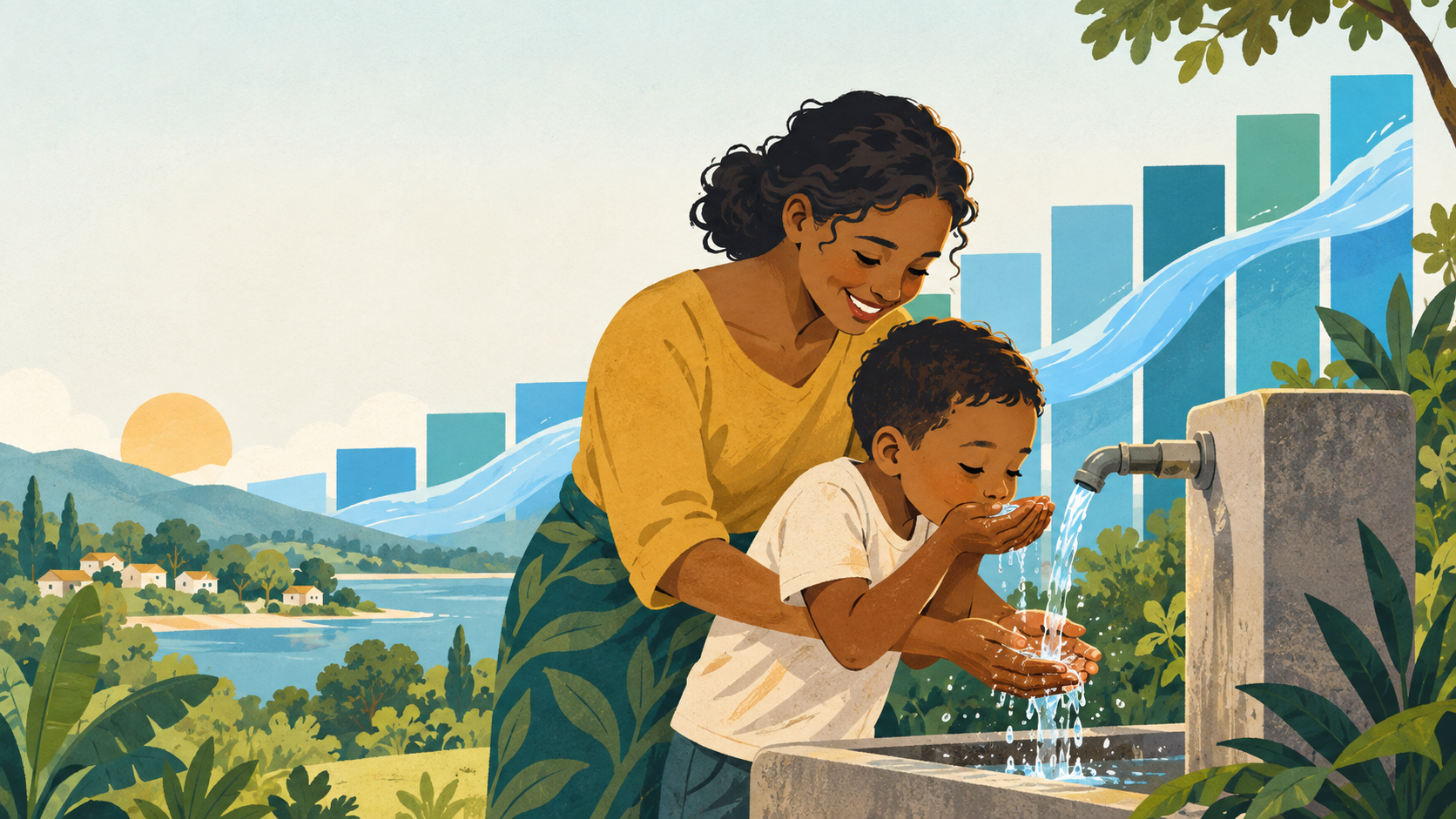
It is a family with safe water nearby. It is a child who can drink, wash, and grow up with fewer dangers built into the most ordinary parts of the day. It is a community where turning on a tap no longer requires a long walk, a risky source, or a guess about what might be in the water.
These changes do not arrive as one dramatic event. They are built through pipes, wells, treatment systems, public health work, local knowledge, careful measurement, and years of persistence.
That makes water progress easy to overlook.
It also makes it worth noticing.
A basic need, made safer
Our World in Data reports that almost three-quarters of the world’s population now uses a safely managed drinking-water source. In 2015, around 70 percent of people had access to safe drinking water. The global share has risen since then, but slowly.[1]
A safely managed source is more than water that looks clean. It is an improved source located on the premises, available when needed, and free from microbiological and priority chemical contamination.[1]
That definition matters because access is not only about whether water exists somewhere nearby. It is about whether people can depend on it.
Progress can become ordinary
A water system is successful when people stop having to think about it.
They fill a glass. Wash a child’s hands. Cook dinner. Rinse vegetables. Go about the day.
No headline marks the moment. No one pauses to celebrate the infrastructure working exactly as it should. The safety becomes part of the background, which is one of the clearest signs that a public system is doing its job.
Ordinary access is not ordinary work. It reflects planning, investment, maintenance, and the efforts of people whose names most of us will never know.
The unfinished work is clear
One in four people worldwide still does not use a safe drinking-water source. In the countries with the lowest incomes, fewer than one-third of people use safely managed water, and many of those who lack access live in Sub-Saharan Africa.[1]
The world’s goal is universal and equitable access to safe and affordable drinking water by 2030. At the current pace, Our World in Data says we are not moving quickly enough to reach it.[1]
That is the fuller truth: progress is real, and the unfinished work is real too.
Hope is stronger when it can hold both facts at once. We can recognize what has improved without pretending the job is complete. We can be grateful for the systems that protect people while paying attention to the communities still waiting for the same protection.
Notice what water makes possible
Clean water is easy to describe as a resource. It is also time, health, dignity, and choice.
It can mean fewer hours spent collecting water. Fewer opportunities for contamination. More reliable routines for families, schools, clinics, and farms. A child gets to spend more of the day learning and playing. A parent gets to plan around something dependable.
The tap is only the visible ending of a much larger human effort.
When you hear that water access has improved, let yourself feel encouraged. Then remember the work behind that progress and the people who are still waiting for it.
Some good news becomes almost invisible when it turns into part of everyday life.
Safe water still deserves our attention.
Sources
[1] Our World in Data, “Clean Water”: https://ourworldindata.org/clean-water