
There is a particular kind of freedom in learning something with no plan to monetize it.
You can study astronomy without becoming an astronomer. You can join a choir without auditioning for a stage. You can take a memoir class because a memory has been waiting for a shape.
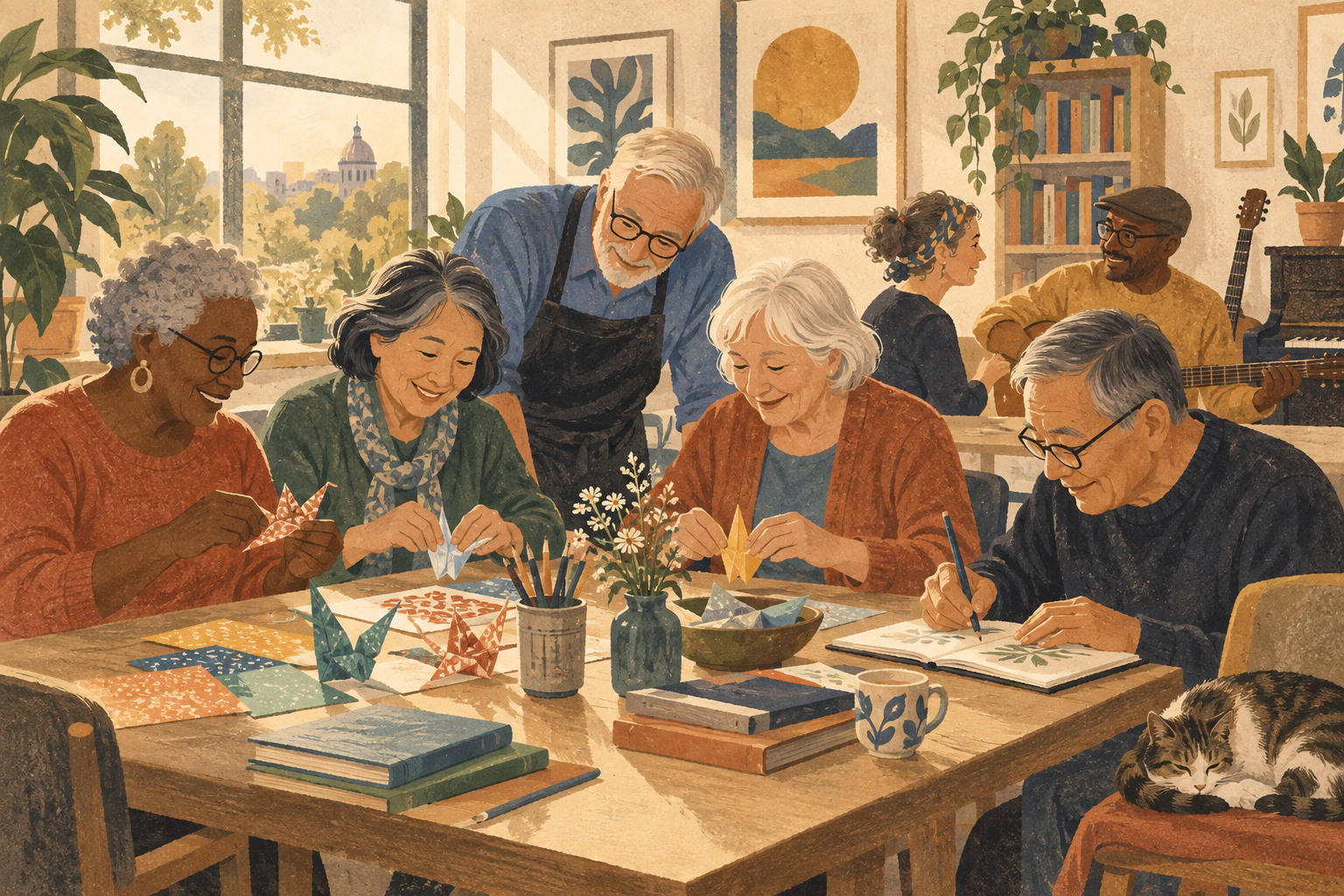
Vanderbilt’s Osher Lifelong Learning Institute offers courses for adults over 50 in subjects including choral singing, memoir writing, astronomy, history, and beginner ukulele. The program describes its purpose in terms that are easy to overlook: learning is also a way to build camaraderie and let curiosity thrive.
That may sound modest beside the usual promises attached to education. We are often told to learn in order to advance, compete, qualify, or keep up. But learning can also make a life feel larger. It gives us new language for old experiences and new companions for the road ahead.
A beginner’s class can also be a gentle antidote to the pressure to already know who we are. We do not need to arrive as experts. We only need to arrive interested enough to ask the next question.
This kind of curiosity is not childish, and it is not a luxury reserved for people with unlimited time. It can be ten minutes with a library book, a local lecture, a cooking lesson, a museum talk, or a conversation with someone whose work we do not understand yet.
Choose one subject that has been tugging at you. Do not ask whether it is useful enough. Ask whether it makes the world feel more vivid.
A life does not become smaller because we are beginners. Sometimes beginning is how we make room for more of it.